
Key Takeaways
- Railay Beach offers world-class limestone climbing with routes for all skill levels, from beginner-friendly 5a climbs to challenging 7a+ test pieces
- The best climbing season is November to March when conditions are cool, dry, and less humid
- Railay West is perfect for beginners and sunset views, while Tonsai attracts advanced climbers with its challenging overhangs and bohemian atmosphere
- Professional climbing lessons cost $50-70 USD and include all technical gear, safety instruction, and guided climbing on real rock
- Railay is only accessible by longtail boat from Ao Nang, Krabi Town, or Ao Nam Mao (15-20 minute ride)
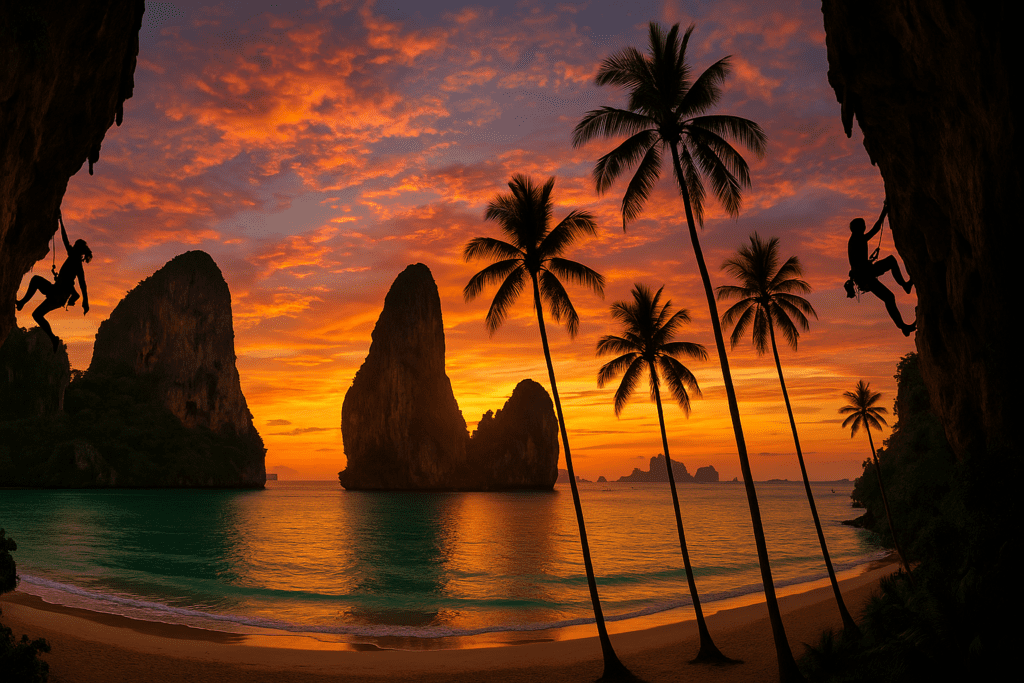
Set against the jade waters of Thailand’s Andaman coast, Railay rock climbing offers an adventure that’s legendary among climbers of every stripe. Known for its majestic limestone cliffs that rise dramatically from pristine sand and turquoise sea, Railay delivers an unmatched blend of thrilling adventure and breathtaking natural beauty. Learn more about climbing adventures in Railay to see why this destination attracts climbers from around the world. For a broader look at the region’s unbeatable climbing options, check out our Top 10 Climbing Spots in Krabi.
Whether you’re a complete beginner eager to try something new or a seasoned crusher looking for your next challenge, this comprehensive Railay climbing guide has everything you need to plan your trip and experience the climb of a lifetime. The limestone karsts here aren’t just stunning to look at — they offer some of the most diverse and accessible climbing you’ll find anywhere on the planet.
Why Krabi Rock Climbing is a World-Class Destination
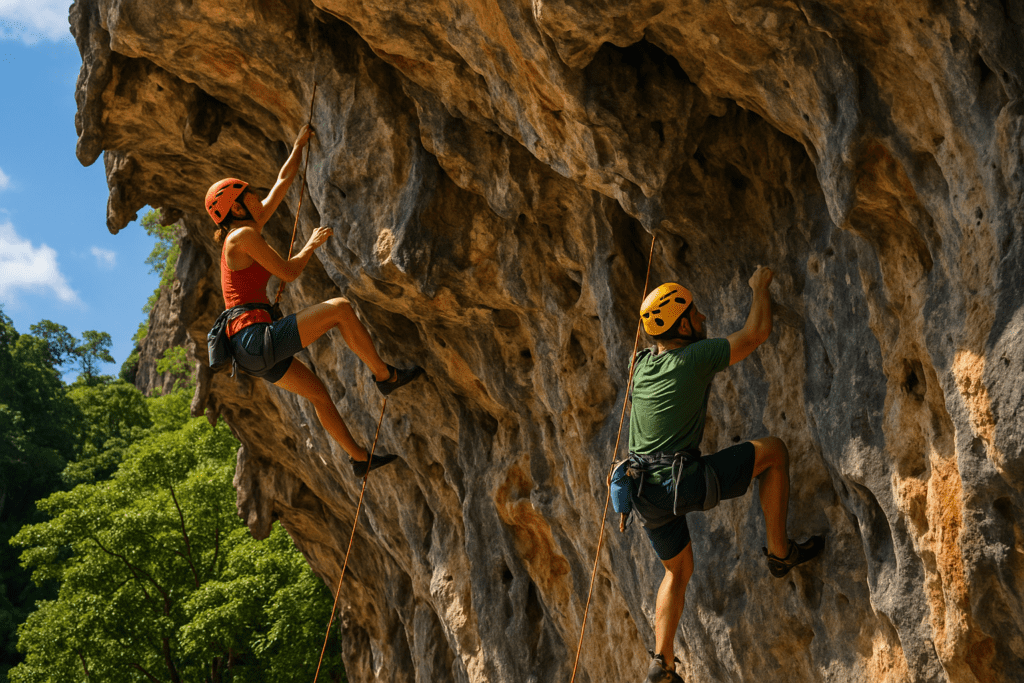
Krabi rock climbing has earned its reputation as a global mecca, built on breathtaking limestone karsts that tower sheer from palm-fringed beaches. But what really sets this region apart isn’t just the scenery — it’s the perfect storm of conditions that make climbing here absolutely magical.
A Perfect Climate: You can enjoy a tropical climate that allows for year-round climbing, with the peak season from November to March offering cool, dry, and less humid conditions. Even during the “off” months, you’ll find plenty of climbers scaling these walls because, honestly, the rock quality is just too good to pass up.
Unbeatable Scenery: From almost every route, you’re rewarded with panoramic views of the ocean, lush jungle, and distant islands. I’ve never climbed anywhere else where taking a rest on the wall means staring out at such pristine wilderness. It’s the kind of view that makes you forget you’re supposed to be focused on your next hold.
A Vibrant Community: The area is known for its welcoming, vibrant, and relaxed climbing community that makes everyone feel at home. Whether you’re nursing a beer after a session or swapping beta with strangers who become instant friends, the social aspect here is unmatched.
At the very heart of the Krabi rock climbing scene is Railay Beach, the peninsula that serves as the perfect base for accessing world-famous routes. But Railay isn’t the only game in town — this region offers multiple climbing areas, each with its own character and challenges.
The Best Rock Climbing Spots in Krabi
Railay West
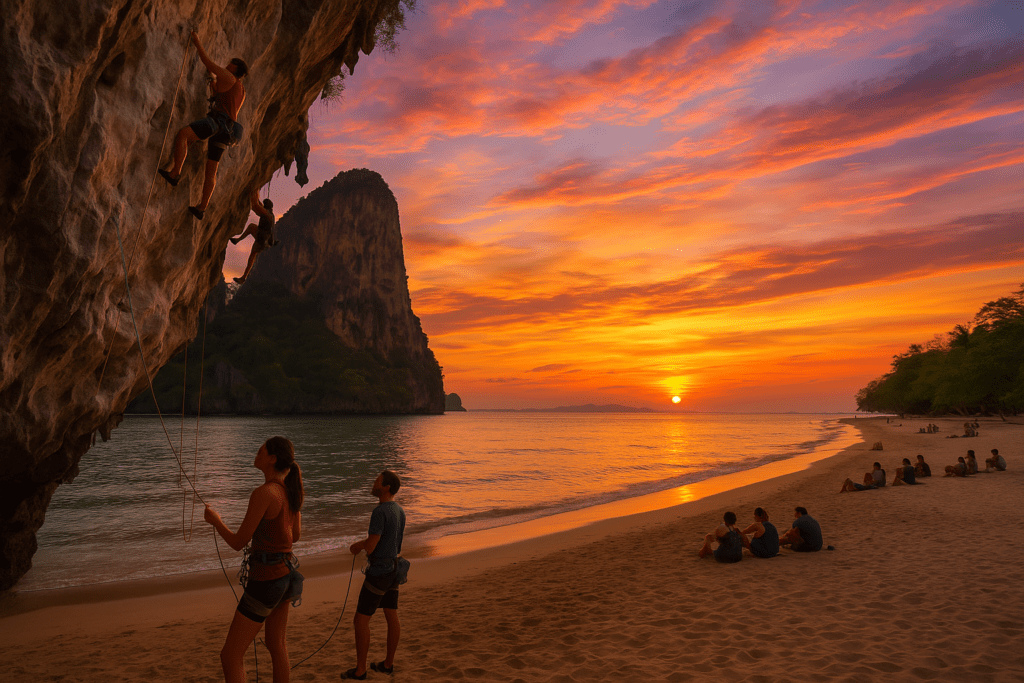
Known for its stunning sunsets over the Andaman Sea, Railay West is perfect for those seeking accessible multi-pitch routes with easy approaches. The crowd levels are moderate, and it offers many routes suitable for beginners and those looking for more relaxed climbs. What I love about Railay West is how you can literally finish a climb and walk straight to a beach bar to watch the sun melt into the horizon. For a full rundown of these and other coastal gems, see our Best Beaches in Krabi Guide.
The approach is ridiculously easy — no jungle trekking or sketchy scrambling required. You can practically roll out of your beachfront bungalow and be clipping bolts within minutes.
Railay East
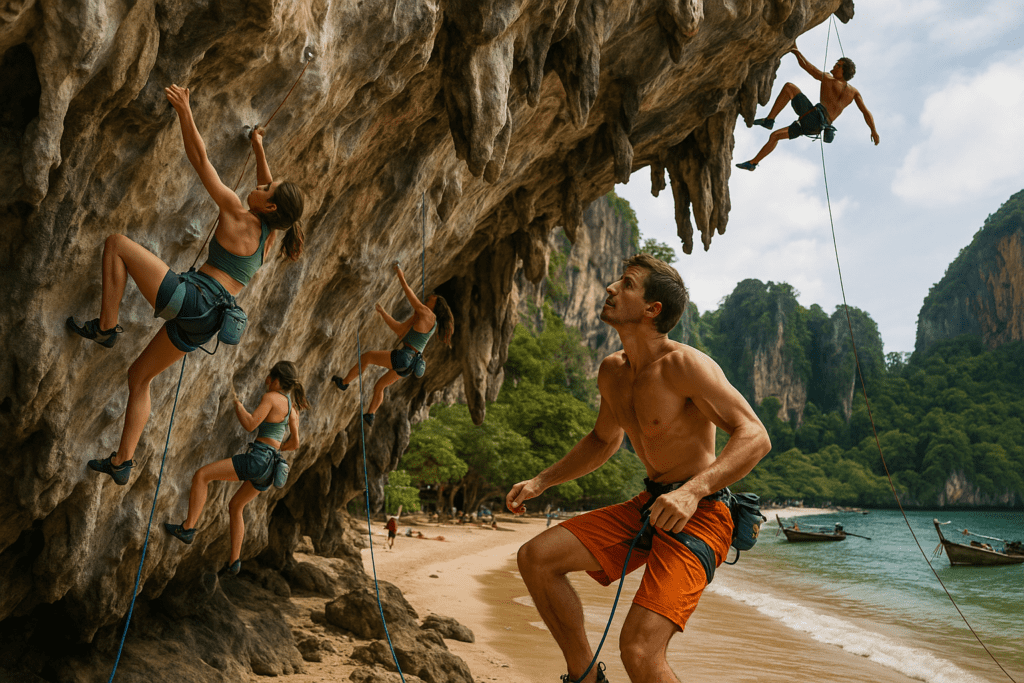
This is the hub for many popular climbing walls, including the famous Muay Thai wall and crags near Diamond Cave. It offers a dense cluster of top-rope and sport climbing options, featuring dramatic overhanging limestone and impressive stalactites that cater to a wide range of skill levels. Check out reviews from other climbers who’ve tackled these iconic walls.
Railay East tends to stay cooler longer in the morning, making it a smart choice for early birds wanting to beat the heat. The variety here is insane — you’ll find everything from gentle introductory routes to brutal overhangs that’ll leave your forearms screaming.
Tonsai Beach
A short walk or longtail boat ride from Railay, Tonsai is where you’ll find the core Tonsai rock climbing scene. It attracts a younger, more dedicated climbing crowd who aren’t afraid to get their hands dirty.
It’s the epicenter for harder sport routes and deep water soloing (psicobloc), characterized by a laid-back, ‘dirtbag climber’ atmosphere. This place has serious character — think hammocks strung between trees, impromptu beach parties, and climbers who measure their stays in months, not days.
A Deep Dive into Tonsai Rock Climbing
While Railay is the famous face of climbing in Krabi, Tonsai rock climbing is its wilder, more adventurous soul. This isn’t where you come for luxury accommodations or fancy cocktails — this is where you come to push your limits and immerse yourself completely in climbing culture.
Challenging Routes: Tonsai is world-famous for its high concentration of challenging sport routes, particularly overhanging climbs rated 6b (YDS 5.10c) and above. It also features classic bouldering spots for strength training and fun. The limestone here is incredibly featured, creating these wild roof systems and technical face climbs that’ll test every aspect of your climbing.
Unique Vibe: It has a distinct bohemian, countercultural scene that attracts climbers and travellers who often stay for months at a time, creating a strong sense of community. You’ll meet people here who’ve basically reorganized their entire lives around climbing these walls. It’s infectious in the best possible way.
Ideal for Advanced Climbers: This area is perfect for intermediate to advanced climbers who crave technical moves, powerful overhangs, and physically demanding challenges. If you’re the type who gets excited about heel hooks and gastons, Tonsai is calling your name.
The Verdict: Tonsai may be slightly less polished than Railay, but it offers what many consider the best combination of adventure, community, and climbing diversity in Thailand. Just don’t expect room service or air conditioning — this is roughing it in the most beautiful way possible.
Your Practical Railay Climbing Guide
How to Get to Railay
Railay Beach is a peninsula cut off from the mainland by limestone cliffs, making it accessible only by boat. This isolation is part of what keeps the magic intact — no cars, no noise, just the sound of waves and climbers calling out beta to each other.
The most common way to get there is via a 15-20 minute longtail boat ride from Ao Nang. You can also take boats from Krabi Town or Ao Nam Mao. The boats run regularly throughout the day, but service can be affected by weather and tides. Pro tip: always negotiate the price beforehand and don’t be afraid to wait for other passengers to share the cost.
Best Season & Weather
The prime climbing season is from November to March. During these months, the weather is cool, dry, and breezy, offering perfect conditions. Your hands won’t slip off holds from humidity, and you can actually climb through the middle of the day without feeling like you’re in a sauna.
From April to October, you’ll encounter hotter, more humid weather with a chance of rain, making the rock feel stickier, though climbing is still possible. The upside? Fewer crowds and potentially better accommodation prices. The limestone here dries quickly after rain, so even if you get caught in a shower, you’re usually back to climbing within hours.
Permits, Fees, and Access
Most climbing areas around Railay are within national parks or regulated zones, so expect to pay modest park entrance fees. We’re talking about $3-5 USD, not exactly budget-breaking amounts. This money goes toward maintaining trails and preserving the natural environment that makes this place so special.
Some crags, particularly those near Diamond Cave, are on privately managed land. If you book a course, your climbing school will arrange access and ensure you’re covered by their insurance. Professional climbing schools like Krabi Rock Climbing handle all the logistics so you can focus on the fun stuff.
Getting Around the Mainland
Before you head over to the car-free Railay peninsula, you’ll need a way to get around Ao Nang or Krabi Town to reach the boat piers and explore local markets. Renting a scooter is the most popular and convenient way to do this. For a hassle-free experience, you can pre-book a motorbike through a service like Byklo to have it ready for all your land-based adventures. For detailed tips on renting and riding scooters in Krabi, check out our Motorbike Rental Krabi Guide.
Having your own wheels gives you the freedom to explore beyond the main tourist areas, hunt down the best local food, and make supply runs without depending on expensive taxi services.
Everything You Need to Know About Rock Climbing Lessons Railay
Numerous reputable local schools offer guided rock climbing lessons Railay is famous for. These aren’t just quick tourist experiences — they’re proper instruction that can set you up with skills you’ll use for years to come.
Courses range from half-day ‘taste of climbing’ sessions perfect for beginners to multi-day clinics on lead climbing or building anchors for more experienced climbers. The half-day courses are great if you’re just curious, but honestly, if you catch the climbing bug (and you probably will), you’ll wish you’d booked more time.
What a Typical Lesson Includes
Expect a comprehensive experience including a safety briefing, equipment fitting (harness, shoes, helmet), instruction on basic knots and belaying techniques, and of course, plenty of time climbing real rock walls under the supervision of an expert. The instructors here aren’t just technically skilled — many have been climbing these specific walls for years and know exactly which routes will challenge you without overwhelming you.
Group vs. Private Lessons
Group sessions are cost-effective and a great way to meet other travellers. There’s something motivating about cheering on strangers who become temporary climbing partners. Private guides offer personalized coaching tailored specifically to your goals and skill level. If you’re already comfortable with basics and want to focus on specific techniques, private instruction is worth the extra cost.
Pricing and Safety
A half-day beginner group lesson typically costs between $50–$70 USD. All reputable schools provide certified instructors and modern, well-maintained safety gear, adhering to international standards. Read reviews from other climbers to get a sense of what to expect from different schools.
The safety standards here are excellent — these aren’t fly-by-night operations. The instructors take their responsibility seriously because their entire business depends on keeping people safe and having fun.
Essential Gear and Packing List
What to Pack From Home
Climbing Shoes: The most important personal item for comfort and performance. Rental shoes work in a pinch, but nothing beats having properly fitted footwear when you’re trying to stand on limestone crystals the size of rice grains.
Chalk Bag & Chalk: Essential for grip in the humid climate. The humidity here will make your hands sweaty faster than you expect, even during the cool season.
Harness: Optional, but bring your own if you prefer the fit. Rental harnesses are fine, but your own gear always feels more comfortable for longer sessions.
Apparel & Protection: Lightweight, breathable clothing, a reusable water bottle, high-SPF sunscreen, and strong insect repellent. The tropical sun reflects off the limestone and water, so you’ll burn in places you never thought possible.
Extras: Consider bringing climbing tape and a small first-aid kit for any minor scrapes. Limestone can be sharp, especially when you’re learning and your technique isn’t dialed yet.
What Local Outfitters Provide
You don’t need to worry about the expensive technical gear. All climbing schools and guides provide ropes, quickdraws, belay devices, and helmets as part of their service. This saves you from hauling heavy gear internationally and ensures you’re using equipment that’s appropriate for local conditions.
Top Route Recommendations by Skill Level
For Beginners (Grades 5a – 5c)
Start your journey on the friendly, often-shaded walls at Railay East, such as the Muay Thai Wall or the easy routes near Diamond Cave. These walls get morning shade, making them perfect for taking your time and learning proper technique without rushing due to heat.
You can also find a few easy slab climbs on Railay West and fun bouldering problems on Tonsai. The slab climbs teach you to trust your feet and move smoothly, skills that’ll serve you well as you progress to steeper terrain.
For Intermediate Climbers (Grades 6a – 6c+)
Challenge yourself on longer, more varied climbs like those on the Tamarind Wall (Railay East), the Full Moon Wall (Railay West), or the Big Wave wall (Tonsai). These routes start introducing overhanging sections and more complex movement patterns.
This grade range is where Railay really starts to shine. The limestone features create interesting puzzles that require both strength and technique to solve.
For Advanced/Expert Climbers (Grades 7a and up)
Test your limits on the iconic, steep overhangs of Railay. Top test-pieces include King Cobra and Defile in Railay East, the legendary multi-pitch Thaiwand Wall on Railay West, and routes like Humanality on Tonsai. These routes are the stuff of climbing legend — the kind of climbs people travel halfway around the world specifically to attempt.
The moves on these routes are incredibly powerful and technical. You’ll need solid technique, excellent fitness, and probably several attempts to work out the sequences.
Beyond the Cliffs: More Krabi Adventure Activities
If you’re hungry for more Krabi adventures beyond the cliffs, explore our Top 10 Day Trips from Krabi to round out your itinerary.
Snorkeling and Diving: Explore vibrant coral reefs and marine life with a boat trip to nearby islands like Koh Poda and Chicken Island. After a hard day of climbing, floating over coral gardens is the perfect way to let your muscles recover.
Sea Kayaking: Paddle through mystical sea caves, hidden lagoons (hongs), and dense mangrove forests right from Railay Beach. Some of the limestone formations you can only appreciate from water level, and the hidden lagoons are absolutely magical.
Hiking: Take the steep but rewarding trek up to the Railay East Viewpoint for that iconic panoramic photo. You can also explore the cool, shaded Diamond Cave to see its impressive stalactites and stalagmites. The viewpoint hike is brutal in the heat but worth every sweaty step for the photos alone.
While you can’t drive on Railay, many of these other Krabi adventure activities, like day trips to national parks or different piers for island hopping, start from the mainland. Having your own transport, like a scooter from Byklo, gives you the freedom to explore Krabi’s wider wonders on your own schedule.
Insider Tips for an Unforgettable Trip
Beat the Heat and Crowds: Climb in the early morning (7-10 AM) or late afternoon (3-6 PM) to avoid the intense midday sun and the largest tour groups. The golden hour light also makes for incredible photos of you sending your project.
Where to Stay: For instant access to the cliffs and a fully immersive experience, stay on Railay itself. You’ll pay more, but rolling out of bed and being on the rock in minutes is priceless. For a wider range of hotels, nightlife, and easier access to the rest of Krabi, base yourself in Ao Nang.
Where to Eat and Drink: For a bohemian vibe, head to Tonsai for its legendary beach bars and communal campfire scene. The food is simple but satisfying, and the conversations with fellow climbers are worth the price of admission. For more upscale dining and relaxed evening cocktails, Railay West has excellent options.
Don’t be surprised if you end up extending your stay. This place has a way of making a week feel like a vacation and a month feel like you’re just getting started.
Ready to Climb These Limestone Giants?
Few destinations in the world offer the wild beauty, friendly atmosphere, and sheer diversity of Railay rock climbing. Whether you’re celebrating your first top-rope send or testing your limits on the brutal overhangs of Tonsai rock climbing, Krabi is an unforgettable adventurer’s paradise.
Ready to scale these limestone giants? Book one of the fantastic rock climbing lessons Railay has to offer through professional guide services or join a guided trip to get started. The community here welcomes everyone, from nervous first-timers to seasoned crushers looking for their next obsession.
Have you scaled these limestone icons or have burning questions about planning your trip? Share your stories and questions in the comments below!
And when you’re ready to get around Krabi on two wheels, rent a motorbike from Byklo.rent for the ultimate freedom to chase cliffs, beaches, and hidden gems at your own pace.
Frequently Asked Questions
Is Railay suitable for beginner climbers?
Absolutely! Railay offers excellent beginner-friendly routes, especially on Railay East at the Muay Thai Wall and near Diamond Cave. Professional climbing schools provide comprehensive half-day courses ($50-70 USD) that include all equipment and instruction. Many routes are graded 5a-5c, perfect for learning basic techniques.
What’s the best time of year to go rock climbing in Railay?
November to March is peak climbing season, offering cool, dry conditions with less humidity. While you can climb year-round, April to October brings hotter, more humid weather and occasional rain. The limestone dries quickly after rain, but the cooler dry season provides the most comfortable climbing conditions.
How do I get to Railay Beach?
Railay is only accessible by longtail boat due to limestone cliffs cutting it off from the mainland. Take a 15-20 minute boat ride from Ao Nang, Krabi Town, or Ao Nam Mao. Boats run regularly throughout the day, but always negotiate prices beforehand and consider sharing with other passengers to reduce costs.
Do I need to bring my own climbing gear?
All technical gear (ropes, quickdraws, belay devices, helmets) is provided by climbing schools and guide services. Consider bringing your own climbing shoes, chalk bag, and harness for better comfort and fit, though rental equipment is available. Don’t forget high-SPF sunscreen and insect repellent for the tropical climate.
What’s the difference between climbing at Railay vs Tonsai?
Railay offers more beginner-friendly routes, better infrastructure, and stunning sunset views, especially at Railay West. Tonsai attracts more experienced climbers with challenging overhanging routes (6b/5.10c and above), a bohemian “dirtbag climber” atmosphere, and deep water soloing opportunities. Tonsai is grittier but offers incredible community and harder climbs.
Are there park fees for climbing in Railay?
Yes, most climbing areas are within national parks or regulated zones, requiring modest entrance fees ($3-5 USD). Some crags near Diamond Cave are on private land. If you book with a climbing school, they typically handle access permissions and include fees in their pricing. The money goes toward trail maintenance and environmental preservation.


