
Estimated reading time: 6 minutes
Key Takeaways
- Experience the Real North: Chiang Rai motorbike tours offer the freedom to explore remote landscapes, hill tribe villages, and the Golden Triangle beyond standard tourist schedules.
- The Right Bike is Crucial: The Honda CRF (250/300) is the superior choice for navigating potholes, steep ascents, and off-road terrain compared to standard 125cc scooters.
- Legendary Routes: Ride the historic Golden Triangle circuit along the Mekong River and tackle the adrenaline-pumping twisties of the Doi Mae Salong loop.
- Preparation Matters: Book high-quality bikes via Byklo to ensure safety and availability, as Chiang Rai has fewer rental options than Chiang Mai.
- Seasonal Timing: The best riding conditions are from November to February; avoid the smoky burning season in March/April and be prepared for wet roads from May to October.
Table of Contents
There is a moment that happens about an hour north of the city limits, usually just after sunrise. The humidity drops, the air turns crisp against your visor, and the road opens up into a ribbon of grey tarmac cutting through a sea of green.
This isn’t the chaos of Bangkok, and it isn’t the beach party of Phuket. This is the North.
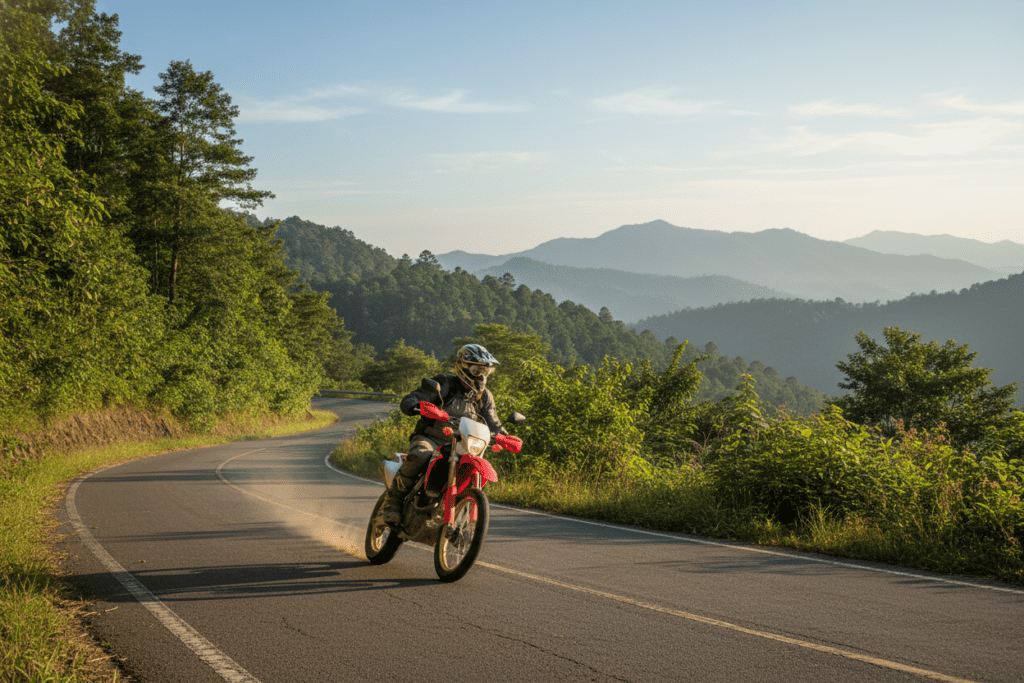
The sensation of that cool mountain air hitting your face and the deep quiet of the remote landscapes is something you can’t get from the window of an air-conditioned van. If you are reading this, you probably already know that Chiang Rai motorbike tours are the only way to truly see this part of the world. You want to smell the pine forests, feel the temperature drop as you climb Doi Mae Salong, and have the freedom to pull over whenever a view stops you in your tracks.
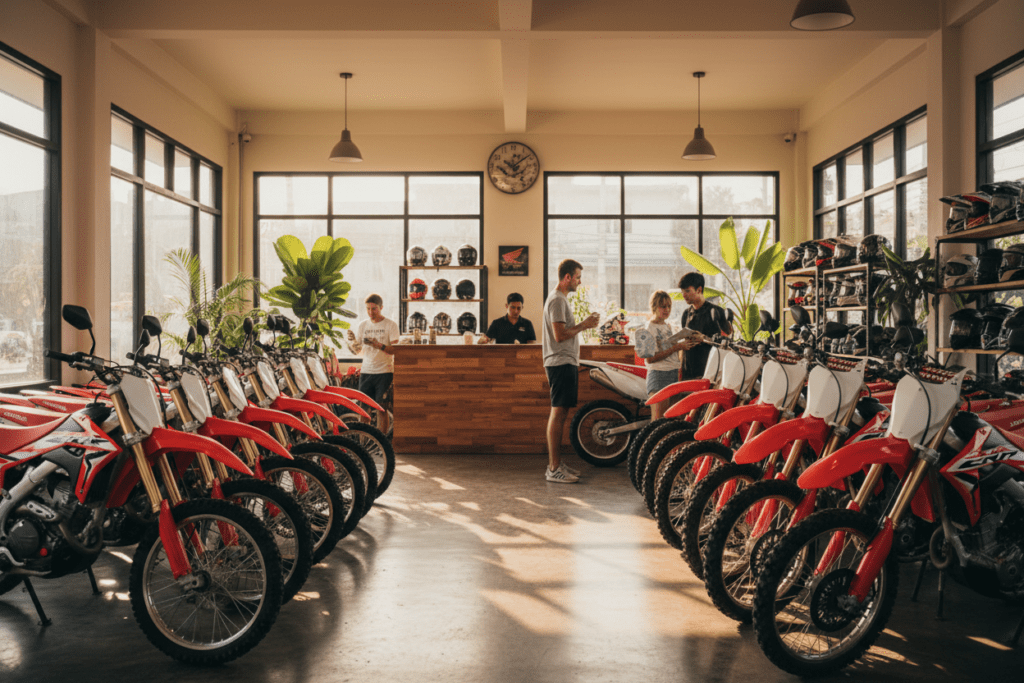
If you’re dreaming about two-wheel freedom beyond Chiang Rai, our comprehensive guide to motorcycle adventures across Thailand is a must-read. But before you start visualizing the twisties, you need the hardware. Most riders start their journey by browsing Byklo to see what inventory is available. It’s the smartest way to move from the “dreaming” phase to the “planning” phase. You can check availability instantly, ensuring that when you land, your bike is ready to go.
Here is your blueprint for escaping the tourist trap and riding the mist in Northern Thailand.
Why the Golden Triangle Demands Two Wheels
The “Golden Triangle”—the infamous convergence of Thailand, Laos, and Myanmar—has a heavy history. For decades, this was the epicenter of the opium trade, a lawless frontier ruled by warlords and smugglers. Today, the poppy fields are gone, replaced by coffee, tea, and terrified tourists on crowded buses.
But the geography hasn’t changed. The mountains are still steep, the valleys are still deep, and the roads are some of the best in Southeast Asia.
When you take a tour bus, you are cargo. You move from Point A to Point B on someone else’s schedule. You see the White Temple, you buy a souvenir, you go home.
When you ride, you are an explorer. You can turn down that nameless dirt track that leads to a hill tribe village that isn’t on Google Maps. You can chase the sunset along the Mekong River without worrying about checkout times. This autonomy is the “why.” It is the thrill of discovery that makes Chiang Rai motorbike tours so addictive.
For a rider’s firsthand perspective on this journey, check out our Golden Triangle Motorcycle Adventure post.
Choosing Your Steed: Why the Bike Matters
Northern Thailand is not flat. The terrain here is a mix of glorious, sweeping highways (like Route 118), rough concrete village roads, and, if you’re adventurous, gravel and red clay that becomes slippery as ice when wet.
If you try to tackle this on a standard 125cc scooter, you aren’t going to have a good time. The wheels are too small for the potholes, the suspension is non-existent, and you won’t have the power to overtake agricultural trucks on steep ascents.
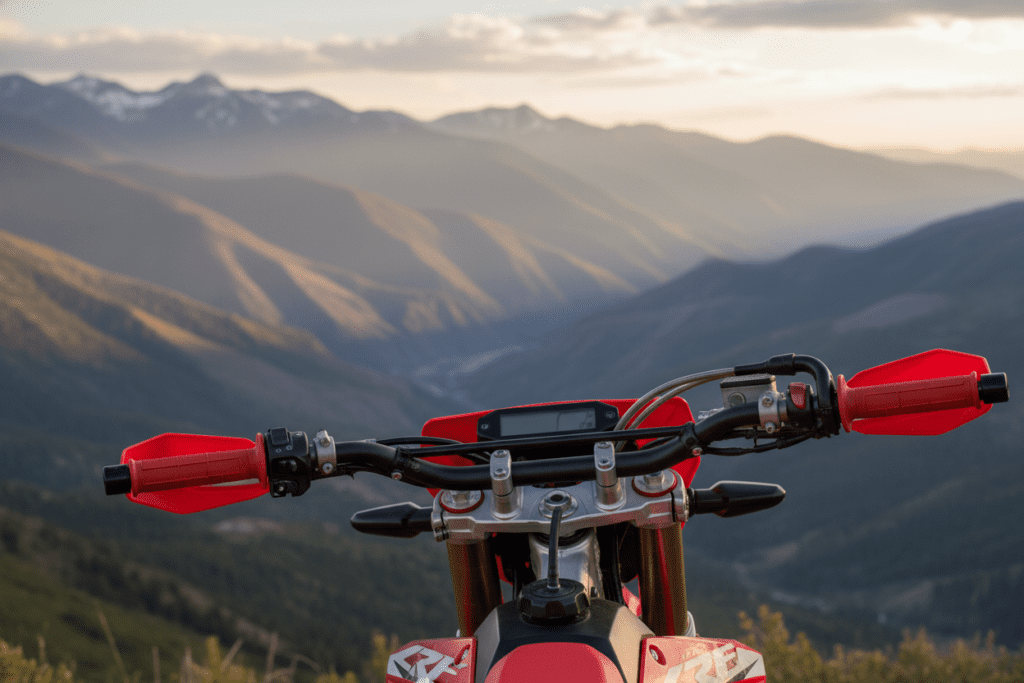
The locals and experienced expats know there is really only one choice for this terrain: you need to rent Honda CRF Chiang Rai styled bikes.
Why the Honda CRF?
The Honda CRF (250 or 300 series) is a “dual-sport” motorcycle. This means it is street-legal and capable of highway speeds, but it has the DNA of a dirt bike.
- Suspension: It has long-travel suspension. When you hit a surprise pothole at 60km/h, a scooter might throw you off. A CRF will just eat it up.
- Power to Weight: It is light enough to manage in a parking lot but has enough torque to carry you and your luggage up a 15% incline.
- Vision: You sit higher up, giving you a better view of the road ahead—and the buffalo that might step out onto it.
The Rental Reality Check
Here is the truth about renting bikes in Southeast Asia: maintenance standards vary wildly. I have seen shops rent out bikes with bald tires, loose chains, and brakes that feel like wet sponges. When you are 100 kilometers from civilization on a mountain pass, you need to trust your machine.
This is where Byklo becomes your safety net. Byklo connects riders with reputable shops that maintain their fleets to international standards. You aren’t just renting a bike; you are renting peace of mind. You know the tires have tread, the oil is fresh, and the brakes will bite when you squeeze the lever. Don’t let a shady rental shop ruin your trip before it starts.
| Feature | 125cc Scooter | Honda CRF 250/300 | Big Bike (650cc+) |
|---|---|---|---|
| Daily Cost | Low | Medium | High |
| Pothole Handling | Poor | Excellent | Good |
| Off-Road Ability | None | High | Low/Heavy |
| Fun Factor | Low | Extreme | High |
The Legendary Route: Riding the Golden Triangle
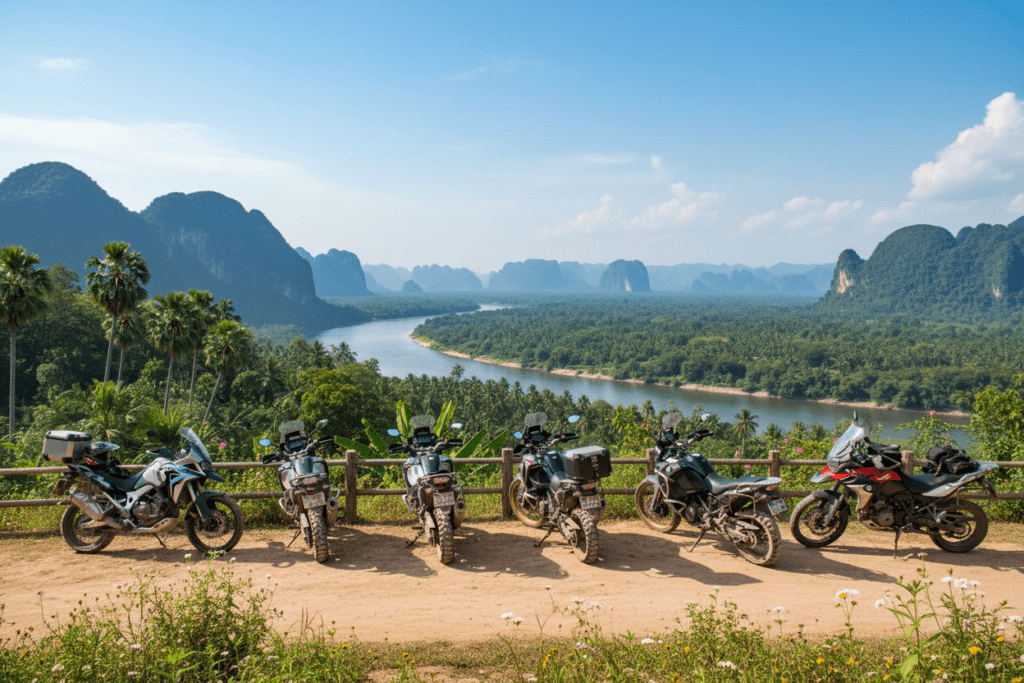
Once you have your bike, where do you go? The classic loop heads north, tracing the border. This is known as the golden triangle route rental circuit.
I recommend securing your bike via Byklo before you even arrive in Chiang Rai. Why? Because Chiang Rai isn’t like Chiang Mai; the rental shops are more spread out, and supply is lower. Booking ahead means you can land, drop your bags at the hotel, pick up your bike, and be on the road within the hour.
The Route Breakdown
Your journey starts by heading North on Route 1 towards Mae Sai. As you ride, the concrete jungle fades, replaced by rice paddies and jagged limestone karsts jutting out of the earth.
Mae Sai: This is the northernmost point of Thailand. It’s a bustling border town with a chaotic market vibe. You can look across the narrow river bridge and see Myanmar. The energy here is frantic, a remnant of its trading post history. Park the bike, grab a coffee, watch the border crossing, but don’t stay too long. The best riding is coming up.
The Mekong River Run: From Mae Sai, head east towards Chiang Saen. This stretch of road runs parallel to the Mekong River. On the other side of that brown, churning water is Laos. The riding here is hypnotic. The air is humid and heavy. You’ll see long-tail boats fighting the current and mist rising off the jungle canopy.
Chiang Saen: This is the heart of the Golden Triangle. Unlike Mae Sai, it is quiet. Ancient brick stupas from the Lanna Kingdom sit crumbling near the river. It feels like a ghost town in the best possible way. Frame your ride as “tracing the lines of history.” You are riding the same paths where opium caravans once traveled, except now you’re chasing sunsets instead of smugglers.
The Highland Escape: The Doi Mae Salong Loop
If the Golden Triangle is about history and rivers, Doi Mae Salong is about adrenaline and clouds. This is the route that makes riders travel across the world to come here.
Locals call it “The Loop,” and if you check forums, you’ll see riders specifically looking for a doi mae salong loop bike. Why the specific search? Because this mountain is steep. Like, really steep.
This is another reason I stress using Byklo to filter for performance bikes. If you are riding two-up (with a passenger) or have heavy panniers, a standard 150cc bike will scream in agony trying to climb these hills. You want a CRF 300 Rally or similar that has the low-end torque to pull you out of hairpins without stalling.
The “Twisties”
The road up to Doi Mae Salong is a masterpiece of engineering. It is a ribbon of asphalt that coils up the mountain like a snake. For riders who love corners, this is paradise. Sinuous switchbacks follow one another in a rhythm that puts you in a flow state.
The Yunnan Connection: As you crest the mountain, the atmosphere shifts. You’ll see red Chinese lanterns, signs in Mandarin, and sudden terraced fields of green. This area was settled by the Kuomintang (Chinese stranded soldiers) after the Chinese Civil War.
The village of Mae Salong feels less like Thailand and more like rural Yunnan. The air is significantly cooler here—sometimes dropping to 10°C or lower in the mornings.
The Tea Stop:
Stop at one of the plantation tea houses clinging to the cliff edge. Order a pot of hot Oolong tea. There is nothing quite like wrapping your cold, gloved hands around a warm ceramic cup while looking out over valleys filled with mist. It grounds you. It reminds you why you ride.
Riding Warning: While the road surface is generally good, the micro-climate here means the road is often damp from cloud cover. Ride smoothly. Don’t grab a handful of brake in the corner. Respect the wet tarmac.
Practical Logistics: When & How to Go
You have the dream, and you know the route. Now let’s look at the logistics to make sure you actually enjoy it.
1. The Best Time to Ride
Timing is everything in the North.
- November to February: This is the sweet spot. The rainy season is over, the sky is a piercing blue, and the air is cool (cold, honestly) in the mornings. For a month-by-month breakdown of weather and festivals, check our best time to visit Chiang Mai guide.
- March to April: Avoid this. This is “burning season” where farmers burn crop fields. The smoke is terrible for visibility and your lungs.
- May to October: The wet season. The scenery is incredibly green, but you will get rained on. If you are an experienced rider, the mud can be fun. If not, stick to the dry months.
2. Safety & Rules
- Left-Hand Traffic: Thailand drives on the left. If you are from the US or Europe, chant “keep left” in your helmet every time you turn onto a road.
- The IDP: You legally need an International Driving Permit (IDP) combined with your home motorcycle license. Police checkpoints are common, and they will check.
- The Buffalo Factor: In rural areas, livestock has the right of way. Always scan the shoulders of the road. If you see a cow, slow down. They are unpredictable.
For more detailed advice, see our Top 10 Tips for Staying Safe While Riding a Motorbike in Thailand.
3. What to Pack
Don’t overpack. You are on a bike.
- Layers: It can be 30°C in the valley and 12°C on the mountain peak. Bring a windbreaker or a riding jacket with a liner.
- Footwear: No flip-flops. Ever. Wear sturdy boots or hiking shoes.
- Navigation: Buy a local SIM card (AIS has the best coverage in the mountains) and mount your phone to the handlebars.
Conclusion: Your Adventure Awaits
You can spend your vacation standing in line for a photo with a white temple, or you can spend it leaning into a corner with the Golden Triangle sprawled out beneath you.
Chiang Rai motorbike tours offer a version of Thailand that most people miss. It’s grittier, quieter, and infinitely more rewarding. The mist is waiting, the tea is hot, and the roads are calling.
The only thing standing between you and that feeling of freedom is the key to the bike. Don’t leave it to chance.
Ready to ride the mist? Secure your Honda CRF on Byklo.rent today to ensure availability, get the best rates, and start your Golden Triangle adventure with confidence.
Frequently Asked Questions
What is the best motorcycle for riding in Chiang Rai?
The Honda CRF 250 or 300 series is highly recommended due to its long-travel suspension, power-to-weight ratio for steep hills, and higher seating position for better visibility on winding mountain roads.
Do I need an international license to rent a bike in Thailand?
Yes, you must have a valid motorcycle license from your home country and an International Driving Permit (IDP). Police checkpoints are frequent in Northern Thailand, and failure to produce an IDP can result in fines.
When is the best time to visit Chiang Rai for a motorbike trip?
The ideal riding season is from November to February when the weather is cool and dry. Avoid the months of March and April due to the burning season and poor air quality.