Estimated reading time: 6 minutes
Key Takeaways
- Beware of Pre-existing Damage: Always inspect and film the bike (including the underside) before leaving the shop to avoid paying for old scratches.
- Avoid the “Jet Ski” Trap: Understand that systemic scams exist in tourist hubs; treat rentals with the same caution as jet skis.
- Protect Your Passport: Never leave your physical passport as a deposit; seek shops that accept cash deposits or use ID photocopies.
- Use a Checklist: Check brakes, tires, and lights thoroughly—your safety depends on it.
- Book Online: Platforms like Byklo.rent offer vetted vendors, preventing the most common street-side scams.
Table of Contents
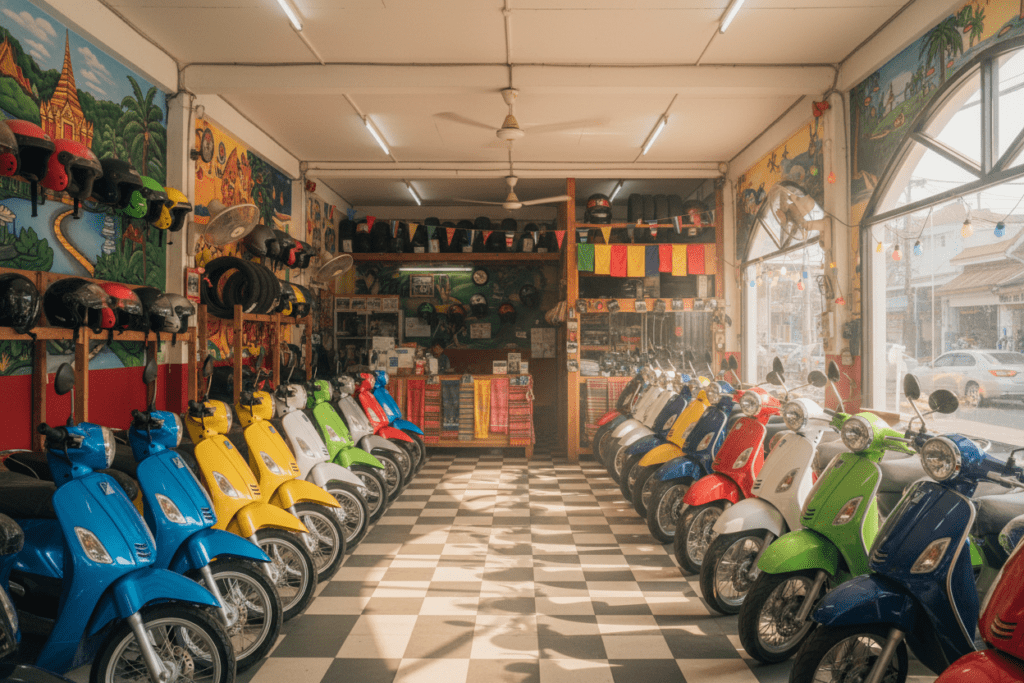
Picture this. You’ve just landed in Thailand. The air is thick and warm, you can smell street food frying garlic and chili in the distance, and all you want to do is grab a scooter and get lost. That’s the dream, isn’t it? The freedom to island hop, the wind in your hair (or, hopefully, your helmet), and the ability to find those hidden beaches that the tour buses can’t reach.
It’s exactly how millions of people imagine their holiday. And for most, it’s the highlight of the trip.
But here’s the cold water to the face. For a growing number of unsuspecting travelers, that dream turns into a financial nightmare because they didn’t know about Thailand Motorbike Rental Scams.
It’s not something anyone wants to think about when they’re in paradise, but the reality is that renting a bike here is filled with potential traps. You are stepping into an unregulated market where tourists are often seen as walking ATMs. One minute you’re cruising down the coast, and the next you’re standing in a dusty shop while a guy shouts at you, demanding hundreds of dollars for a scratch you didn’t make.
It sounds dramatic, but it happens every single day in places like Phuket, Pattaya, and Samui.
Now, I’m not telling you this to scare you off riding. Riding is the best way to see the country. I’m telling you this so you can be smarter than the scammers. While the street-side rental scene is still the Wild West, platforms like Byklo.rent are finally bringing some standards and vetting to the industry. But if you are going to rent, you need to know exactly how the game is played before you hand over your cash.
The “Damaged Bike” Extortion (The Most Common Trap)
Let’s start with the big one. If you only remember one thing from this guide, make it this section. The damaged bike scam thailand is the bread and butter of shady rental shops. It is efficient, it’s hard to disprove, and it relies entirely on you being too relaxed during the pickup process.
Here is exactly how it goes down.
You walk into a shop. The bike looks fine. Maybe it’s a bit older, has a bit of road grime on it, but it runs. You do a quick walk-around, sign the paper, and leave. You have a great week. You park carefully. You don’t crash. You treat that machine like gold.
Then comes the return drop-off.
This is where the atmosphere changes. The friendly guy who rented you the bike is gone, or his mood has shifted completely. He walks up to the bike with the scrutiny of a forensic investigator. He crouches down. He looks under the fairings. He runs his hand along the bottom of the exhaust pipe.
And there it is. A scratch.
It might be tiny. It might be underneath the bike where you never thought to look. He points at it and shakes his head. “You crash,” he says. You argue that you didn’t crash. You point out that you’ve been riding for ten years. It doesn’t matter. He pulls out a calculator and punches in a number that makes your eyes water. Maybe 5,000 THB for a plastic panel that costs 300 THB to replace.
This is extortion, plain and simple. The scam works because they rent out bikes that already have subtle, pre-existing damage—often hidden on the underside or masked with stickers or dirt. They know exactly where the scratch is because it’s been there for months. They’ve probably charged the last five tourists for that same scratch.
If you refuse to pay, things get ugly. They might start shouting to intimidate you. In the worst-case scenarios, they threaten to call the police. And here is the uncomfortable truth: in some tourist hotspots, the local police might be friends with the shop owner. You are a foreigner leaving in two days; the shop owner is a local fixture. You can guess who often wins that argument.
It puts you in a position where paying $150 or $200 feels like the only way to escape the situation. It ruins the vibe of the holiday instantly. You can read more about how these traps work on guides about avoiding scams to understand just how prevalent this tactic is. To learn how to scam-proof your rental and handle disputes with confidence, check out our Motorbike Rental Problems Thailand: 4 Steps to Scam-Proof.
The “Jet Ski” Analogy (Understanding the System)
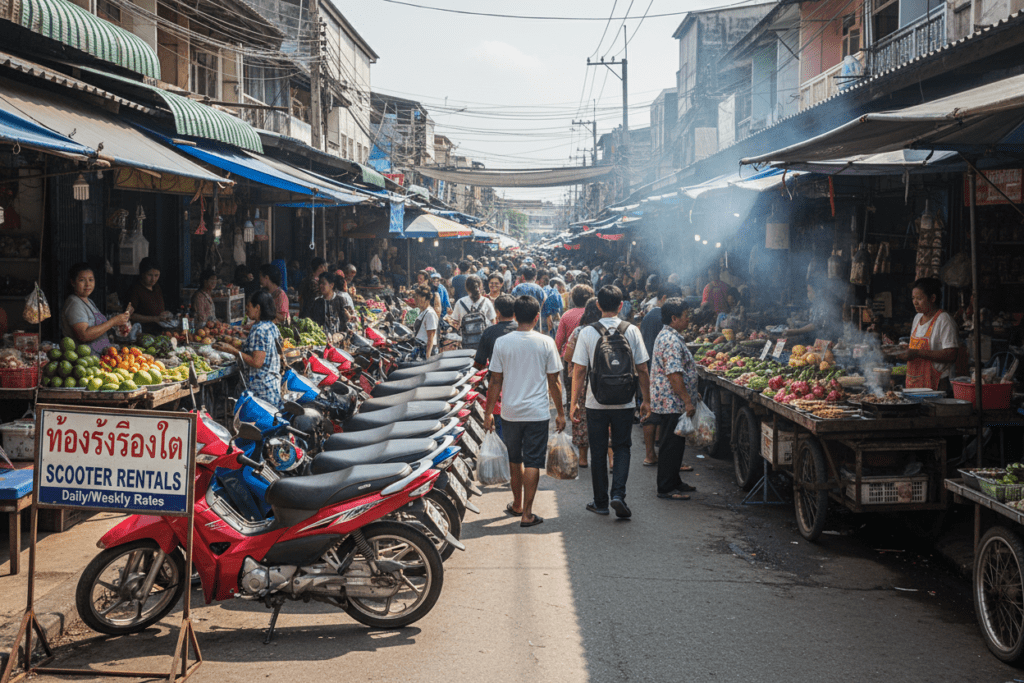
If you’re thinking, “That sounds paranoid, surely it’s just a few bad apples,” you need to look at the bigger picture. This isn’t just bad luck; it’s a business model. To understand it, you have to look at the infamous jet ski scam thailand.
You’ve probably seen the videos on YouTube or heard the horror stories from friends who went to Phuket.
The jet ski scam is legendary. You rent a jet ski, ride it for 30 minutes, and bring it back. The operators immediately swarm the vehicle, pointing at a hull scratch or claiming you ruined the engine intake. They demand thousands of dollars. If you don’t pay, big guys show up to threaten you.
Why am I talking about jet skis in a motorbike article?
Because the mechanics are identical. The vehicle changes, but the scam is the same. It is a systemic issue in major tourist hubs. The motorbike scam is just the land-based version of the jet ski trap. They rely on the fact that you are excited, distracted by the scenery, and likely leaving the country soon. They know you don’t have time to fight a legal battle.
It’s not an accident. It’s a set-up.
When you realize that this is a structured system used across different types of rentals, you realize you can’t just rely on a “good feeling” about a shop. You wouldn’t rent a jet ski in Patong without filming every inch of it first, right? You have to apply that same level of cynicism to your motorbike rental.
If a shop looks sketchy, if the reviews are nonexistent, or if the prices are too good to be true (like 100 baht a day for a brand new PCX), walk away. Generally, if it feels like you’re getting a deal that doesn’t make economic sense for the owner, you are the product, not the customer.

The Passport Hostage Situation
This brings us to the leverage. How do they force you to pay for damage you didn’t cause? They probably have your most valuable possession locked in a drawer behind the counter.
Almost every street-side rental shop will ask for your passport. They will tell you it’s standard procedure. They will say, “No passport, no bike.”
This creates the rent scooter thailand no passport dilemma.
Handing over your physical passport is incredibly risky. Your passport is government property; it’s your only ID, and it’s your ticket home. When a rental shop holds your passport, they have total control over you.
Let’s go back to the “damaged bike” scenario. The guy demands 6,000 THB for a scratch on the muffler. You refuse to pay because it’s a scam. He simply crosses his arms and says, “Okay, then I keep passport.”
Now what? You have a flight to catch tomorrow. You can’t leave the country without that book. You are effectively a hostage. Most people, in a panic, will run to the nearest ATM and withdraw the cash just to get their document back. It is essentially ransom.
So, can you actually rent a scooter without giving them the physical booklet?
Yes, absolutely. But you have to work for it.
Decent, honest shops—the kind you want to do business with—will usually accept a cash deposit instead. This typically ranges from 3,000 to 5,000 THB, depending on the bike model. They will take a photocopy of your passport and hold the cash.
If there is a dispute about damage later, the worst that happens is you lose the deposit. They cannot stop you from leaving the country. They cannot hold your legal status hostage.
However, finding these shops on the street can be exhausting. You might have to walk into ten different places, sweating in the heat, asking “Copy passport okay?” only to be rejected by nine of them. The scammers want your passport because they know the cash deposit isn’t enough leverage for their extortion schemes.
This is one of the main reasons I always recommend booking through a platform that manages this for you. When you use Byklo.rent, you are often dealing with vendors who have clearer deposit terms or are vetted enough that they aren’t in the business of holding documents for ransom. It removes that knot in your stomach that forms the moment you hand your passport to a stranger.
How to Spot a Safe Rental Shop (Actionable Checklist)
Okay, enough with the doom and gloom. You are in Thailand, and you want to ride. How do you actually find a safe motorbike rental thailand? You can’t just cross your fingers and hope. You need a process.
I’ve rented dozens of bikes across Southeast Asia, and I have a strict protocol. If a shop fails any of these checks, I walk out. No exceptions.
1. The Digital Recon
Never, ever just walk into a shop because it has a nice sign or it’s next to your hotel. Before you even put on your shoes, open Google Maps. Look at the reviews.
But don’t just look at the star rating. Scammers buy fake 5-star reviews. You want to look for the 1-star reviews. Read the angry ones. Do they mention “scam,” “stolen money,” “fake damage,” or “rude owner”? If you see more than one or two reviews mentioning these things, run. It’s not worth the risk.
There is a massive difference between a shop with 4.8 stars because the bikes are new, and a shop with 4.8 stars because they bribed people. Read the negative comments—they tell the truth.
2. The 360-Degree Evidence
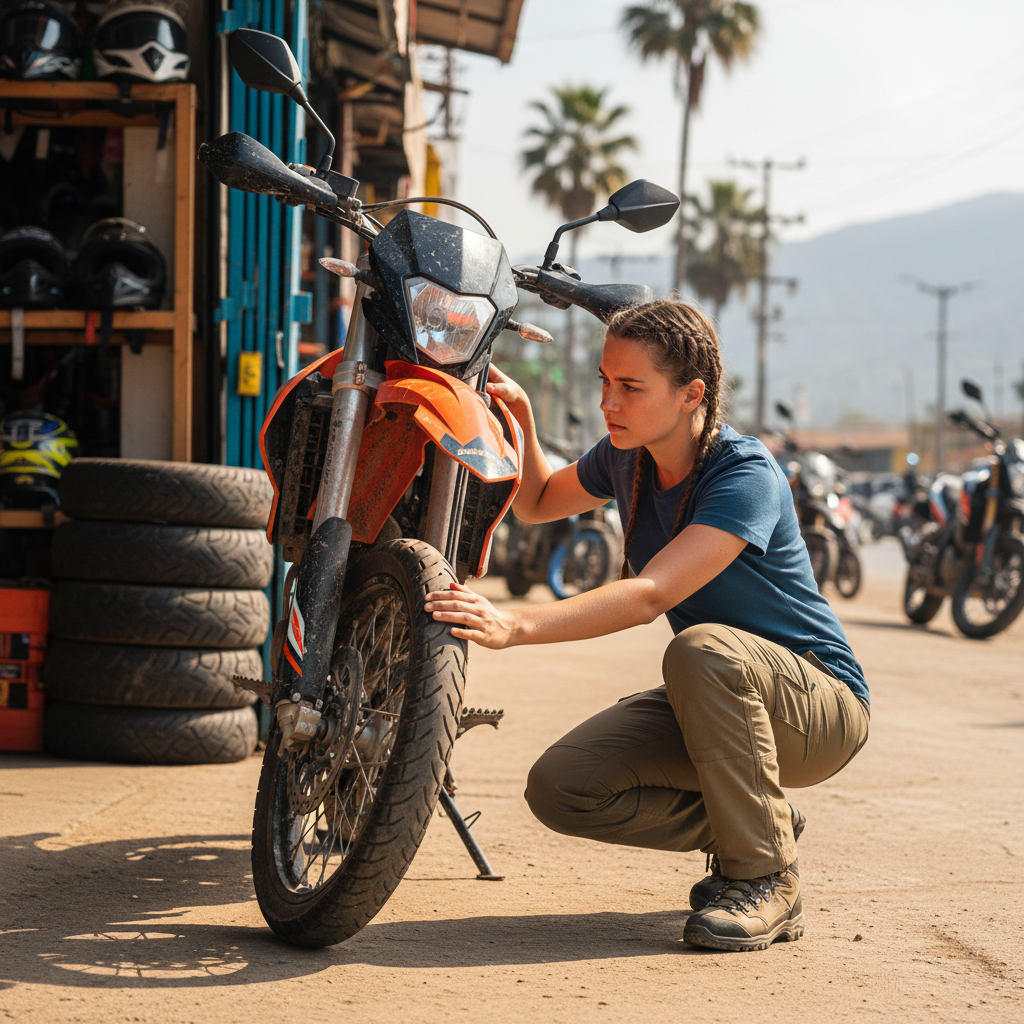
This is your insurance policy. When you pick up the bike, take your phone out. Do not just take a few photos. Switch to video mode. Turn on the flash, even if it’s daytime.
Walk slowly around the entire bike. Film close-ups of every panel.
But here is the pro tip: Film underneath.
Get down on your knees. Film the bottom of the plastic fairings. Film the underside of the exhaust. Film the rims. Scammers love to claim damage in places you didn’t look. If you have a 4K video timestamped at pickup showing that the scratch was already there, their argument falls apart. I usually narrate the video too: “Scratch here on the left mirror, dent here on the front fender.”
Do this in front of the shop staff. It shows them you are not an easy target.
For a concise, step-by-step pre-ride inspection, follow our Motorbike Rental Checklist Thailand: 5-Minute Inspection.
3. The Mechanical Shake-Down
Safety isn’t just about scams; it’s about not dying on a mountain road in Koh Phangan. There are zero safety inspections for rental bikes in Thailand. A bike could have been crashed yesterday and put back on the line today.
- Brakes: Squeeze them hard. Both of them. If the lever touches the handlebar, the brakes are worn out. Ask for a different bike.
- Tires: Look at the tread. Is it bald? If it rains (and it rains a lot in Thailand), a bald tire is a death sentence on slippery asphalt.
- Lights: Check the blinkers and the headlight. You do not want to be driving home from a beach party in the dark with no lights.
4. The Paperwork
Read the contract. Is it in English? If it’s only in Thai, do not sign it.
Look for hidden clauses. Some shops have a “loss of use” fee. This means if you scratch the bike and it takes 3 days to fix, they charge you the daily rental rate for those 3 days plus the repair cost. It’s a rip-off.
Also, check the late return policy. Some places charge a full day for being one hour late. You can find detailed checklists on forums like Tripadvisor where travelers share their own checklists, but generally, trust your gut. If the contract feels like a trap, it is. For a complete rental walkthrough, including document and deposit best practices, see our Motorbike Rental Thailand Guide: Scooters from 150 THB/Day.
Instead of wasting hours scrubbing through doubtful Google Maps reviews, you can save yourself the headache by using Byklo, where vendors are pre-vetted for quality and honesty.
The Modern Solution: Renting Online with Byklo
If reading all that made you feel like renting a bike is a full-time job, I get it. Dealing with Thailand Motorbike Rental Scams is exhausting. It kills the spontaneity of the trip if you have to treat every interaction like a potential crime scene.
This is why the industry is shifting. The old way of renting—walking the streets, handing over passports, praying the bike has brakes—is dying out for smart travelers.
The solution is Byklo.rent.
Think of Byklo as the filter that keeps the garbage out. It’s a platform specifically designed to connect travelers with legitimate, vetted motorbike rental shops.
Here is why it changes the game:
- The Vetting Process: You don’t have to guess if a shop is shady. Byklo does the homework. They screen the vendors. If a shop has a history of scamming tourists or renting out death-trap bikes, they don’t get on the platform. It’s that simple. You are fishing in a clean pond.
- Transparent Pricing: We’ve all been there—the guy says “200 baht,” but then adds tax, and helmet fees, and insurance fees. With Byklo, the price is the price. No surprises when you arrive.
- The Digital Trail: When you rent with cash on the street, there is no record. It’s your word against theirs. When you book online through a platform, there is a digital audit trail of the transaction. It keeps everyone honest.
- Safety Standards: You are far more likely to get a bike that has actually been serviced.
It’s essentially an insurance policy against a ruined holiday. You pay to lock in a good bike from a good human being, rather than rolling the dice with a random street vendor who might be looking to make his monthly rent off your “scratched” fender.
Ready to ride? Book your vetted motorbike in advance on Byklo.rent to skip the stress and ensure a great trip.
Conclusion
Thailand is an incredible place. There is nothing quite like the feeling of zipping through the jungle on two wheels, heading toward a sunset on the Andaman Sea. You absolutely should do it.
But you have to be smart. “Alert, not paranoid”—that’s the mantra.
The days of naive travel are over. You know the risks now. You know about the scratched exhaust trick. You know about the passport hostage leverage. You know to check the tires before you roll out.
If you choose to rent from the street, take those photos. Take that video. Check those brakes like your life depends on it, because it does. Read every word of that contract.
But if you want to skip the stress, just skip the street hassle entirely. Do yourself a favor and book your ride through Byklo.rent. It’s the easiest way to ensure a legitimate, safe motorbike rental thailand experience so you can focus on the beach, the food, and the adventure, rather than worrying about the guy with the calculator waiting for you to return.
Safe riding, and enjoy the Land of Smiles.
Frequently Asked Questions
What is the “Damaged Bike” scam in Thailand?
This is a common scam where rental shops falsely claim you scratched or damaged the motorbike and demand exorbitant fees for repairs. These damages are often pre-existing or hidden on the underside of the bike.
Do I really need to leave my passport to rent a scooter?
No. While many street shops ask for it, it is safer to find a shop that accepts a cash deposit (usually 3,000–5,000 THB) and a photocopy of your passport. Platforms like Byklo help you find vendors who don’t hold passports hostage.
Is it safe to drive a motorbike in Thailand?
Riding can be dangerous due to traffic conditions and road quality. Always wear a helmet, ensure you have a valid International Driving Permit (IDP), check the bike’s brakes and tires before renting, and drive defensively.
How can I avoid being scammed when renting a motorbike?
Always film a detailed 360-degree video of the bike (including the underside) upon pickup. Check Google Maps specifically for 1-star reviews mentioning scams. Alternatively, book through vetted online platforms to ensure the vendor is trustworthy.