Estimated reading time: 8 minutes
Key Takeaways
- Hidden Costs: Medical treatment in Thai private hospitals is expensive; government “Por Ror Bor” insurance covers very little.
- Insurance Loopholes: Standard policies often exclude “adventure sports” or motorbikes over 50cc. Most Thai rentals are 110cc-125cc.
- License Requirements: To be legally covered, you need a valid Motorcycle License from home and an International Driving Permit (IDP).
- Equipment Matters: Renting from vetted sources ensures roadworthy bikes (good brakes/tires) and minimizes accident risks caused by mechanical failure.
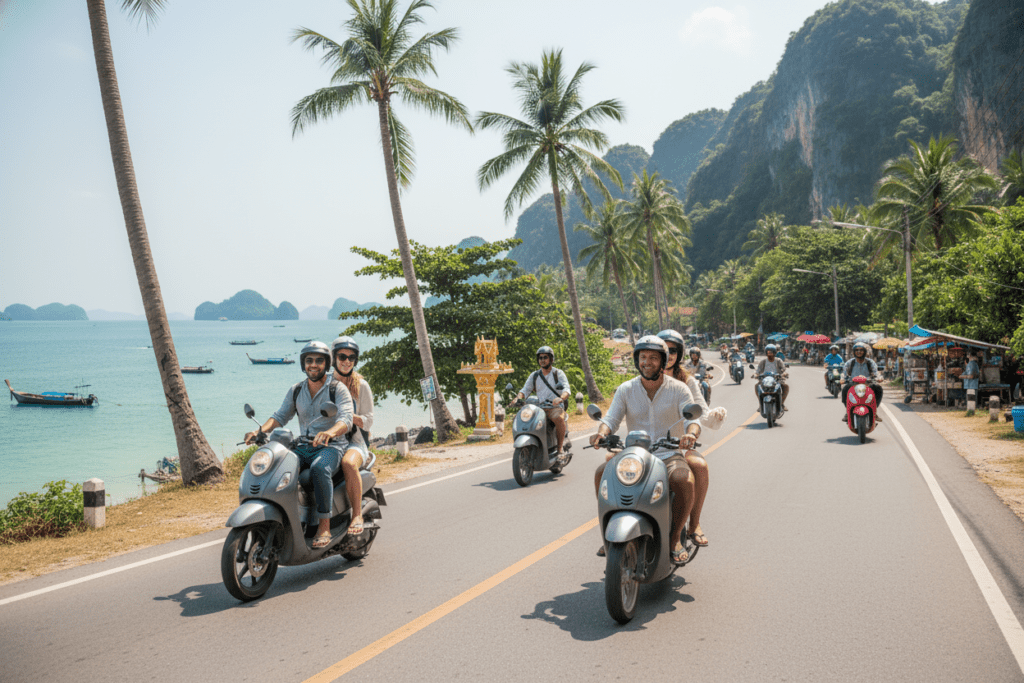
You can almost feel the humidity sticking to your shirt and the wind hitting your face just thinking about it. That dream of renting a scooter in Thailand is powerful. It’s the imagery of freedom—zipping along the coast of Koh Lanta to find a secret beach, or leaning into the curves of the famous Mae Hong Son Loop up north. There is absolutely no better way to see the country. The buses are fine, but they don’t let you stop for a coconut whenever you want.
But we need to have a serious conversation before you pack your helmet.
While the dream is beautiful, the reality on the asphalt is a little more jagged. It’s not something travel influencers talk about often, but Thailand has one of the highest road accident rates in the world, and a massive chunk of those statistics involve motorcycles. It’s chaotic out there. Read about motorcycle accident rates on ExpatDen.
That isn’t meant to scare you out of your trip. It’s meant to wake you up. If you go in blind, assuming your standard travel insurance has your back, you are playing a very expensive game of roulette. This Thailand Motorbike Insurance Guide is here to bridge the gap between that dream vacation and a potential financial disaster.
Understanding the local laws, the brutal reality of medical costs, and the fine print of insurance policies isn’t just boring paperwork. It is the only thing standing between you and a GoFundMe campaign. It is protection for your wallet and your well-being.
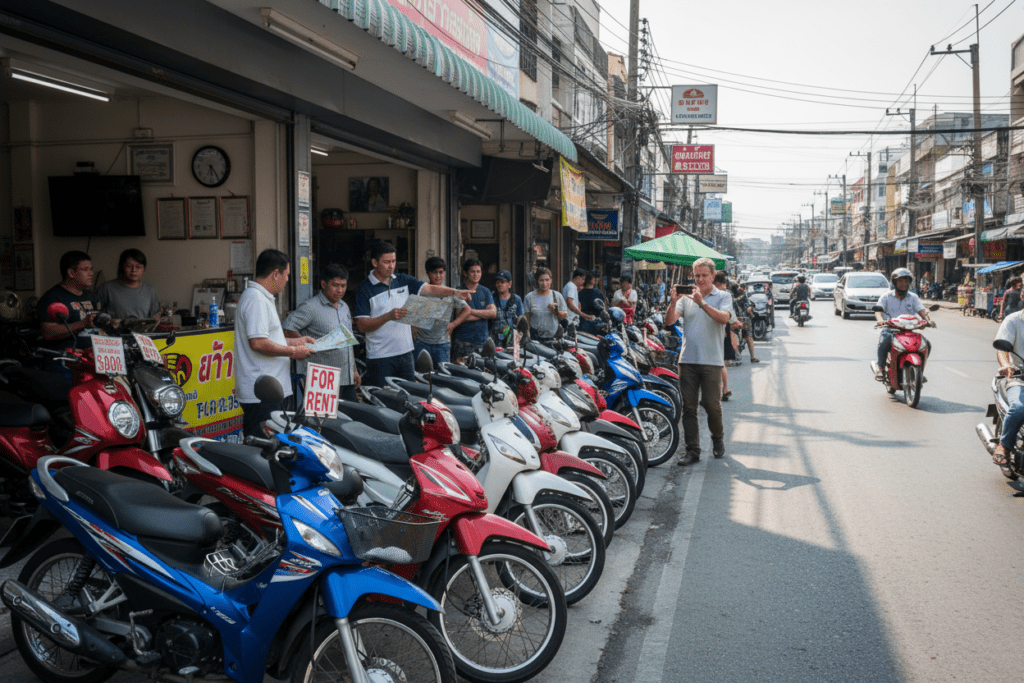
Safety actually works as a triad. You need the right gear on your body Top 10 Tips for Staying Safe While Riding a Motorbike in Thailand, the right insurance policy in your pocket, and the right vehicle under you. That last part is where people usually slip up. They rent from the first guy they see with a “For Rent” cardboard sign.
Don’t do that. You want to start your trip on the right foot by securing a vehicle that has actually been serviced. This is why I always recommend checking out Byklo.rent to find vetted, reliable motorbikes. It removes the “luck of the draw” element you get with roadside stands, ensuring you aren’t riding a death trap before you even leave the parking lot.
The Real Cost of Accidents in Thailand (The Financial Reality)
Let’s talk money. And I don’t mean the 50 baht you’re going to spend on a plate of Pad Kra Pao.
There is a massive misconception among travelers that because Thailand is affordable for food and hotels, the medical care must be cheap too. That is a dangerous assumption. Thailand has a two-tier medical system. There are government hospitals, which are crowded and slow, and then there are the private international hospitals.
If you crash a bike, the ambulance is almost certainly taking you to the nearest private hospital. These places are incredible—honestly, they are like 5-star hotels—but they charge Western prices.
If you scrape your knee, you’ll be fine. But if you break a bone, need an MRI, or require surgery? You are looking at financial ruin if you aren’t prepared.
Here is the stark reality of motorbike accident Thailand cost data. Just walking into the emergency room for a trauma assessment is going to cost you anywhere from 5,000 to 15,000 THB ($140–$425 USD). That’s just to have a doctor look at you and maybe clean a wound.
If you need surgery—say, to fix a broken collarbone or put a pin in a leg, which are very common injuries for bike spills—the price jumps to 100,000–300,000 THB ($2,800–$8,500 USD). And that is for a standard surgery. If you have complications or multiple injuries, the meter keeps running.
Recovering in a hospital bed for a week? That can easily exceed 150,000 THB ($4,200 USD). See the cost breakdown on ExpatDen.
I have seen friends stuck in hospitals in Phuket unable to checking out because they owe $10,000 USD immediately. Hospitals in Thailand are businesses. They often require payment guarantees or upfront cash before they perform major surgeries on tourists.
This brings us to the heartbreaking reality of medical bills Thailand tourist patients face. You have probably seen the posts on Facebook or GoFundMe. “Help Sarah get home” or “John’s surgery fund.” These aren’t scams; they are usually travelers who thought they were invincible or thought their credit card insurance was enough.
You might be thinking, “Doesn’t the rental come with insurance?”
Sort of, but not really.
There is something called “Por Ror Bor” (Compulsory Third Party Liability). By Thai law, every registered vehicle must have this. It provides a basic safety net for accident victims. But here is the catch: the coverage is painfully low.
It usually caps out around 30,000 to 80,000 THB for medical expenses. As we just discussed, a serious crash can burn through that 30,000 baht in the first hour of admission. Por Ror Bor is designed to help locals with minor scrapes, not to cover a foreigner’s complex orthopedic surgery or medical evacuation home. You simply cannot rely on it. Learn more about Compulsory Insurance on CheckDi.
The gap between what the government insurance pays and what the hospital charges is entirely on you. That is why private insurance is non-negotiable. For an overview of coverage tiers and costs, see Motorbike Rental Insurance Thailand: 4 Tiers & 5,000 THB.
Demystifying Travel Insurance Coverage (The Fine Print)
This is the section where I need you to pay close attention. This is where 90% of tourists fail.
You might have a great travel insurance policy. Maybe it came with your premium credit card, or maybe you bought a “Gold Plan” from a big-name insurer. You probably think, “I have medical coverage up to $1,000,000, I’m fine.”
You are probably not fine.
Standard thailand travel insurance motorbike policies are riddled with exclusions. Insurers know that riding a scooter in Southeast Asia is risky, so they look for every reason not to pay.
The first hurdle is the “Adventure Sports” clause. Many basic policies exclude two-wheeled vehicles entirely. If you haven’t specifically checked the box for “motorcycling” or “adventure sports,” your claim will be denied instantly.
But here is the technical trap that catches almost everyone: The Engine Size Clause.
Read the fine print of your policy. It likely says something like, “Covers operation of motorcycles with an engine capacity of up to 50cc.”
This is a massive problem. Why? Because you cannot rent a 50cc scooter in Thailand. They basically don’t exist in the rental market.
The standard Honda Click, Honda Scoopy, or Yamaha Fino that everyone rides? Those are 110cc, 115cc, or 125cc.
If your policy limits you to 50cc and you crash a 125cc Honda Click, you are driving a vehicle that is excluded from your policy. The insurer will look at the police report, see “125cc,” and stamp “DENIED” on your claim. It doesn’t matter if the accident wasn’t your fault. You were operating a vehicle you weren’t insured for. Check the engine size facts on ExpatDen.
You also need to check if you are covered as an operator or just a passenger. Some policies will cover you if you are sitting on the back of a bike driven by a licensed professional, but not if you are the one holding the handlebars.
So, before you get on a plane, you need to sit down with a cup of coffee and your policy document. Use this checklist:
- Engine Capacity: Does it explicitly cover 125cc motorbikes? (Look for “125cc” or “over 50cc”).
- Role: Does it cover you as the “driver” or “operator”?
- Medical Evacuation: If you get really hurt, can they fly you home?
- Protective Gear: Does the policy require a helmet? (Spoiler: Yes, and you should wear one anyway).
If you don’t check these boxes, you aren’t insured. You just have a piece of paper that makes you feel safe until you actually need it.
The License Trap: The “Legal Act” Clause
Let’s assume you found an insurance policy that covers 125cc bikes. You’re good, right?
Not yet.
Insurance contracts almost always contain an “Illegal Act” clause. This basically says: “If you are doing something illegal at the time of the accident, we don’t have to pay you.”
In Thailand, the most common illegal act for tourists is driving without license thailand insurance implications are severe.
Here is the rule, plain and simple. To legally drive a motorbike in Thailand, you need two things:
- A valid motorcycle license from your home country. (Not a car license. A motorcycle license).
- An International Driving Permit (IDP) stamped for motorcycles.
If you have a car license at home, you cannot legally ride a motorcycle in Thailand. Even if you have been riding scooters in your neighborhood for years, if the license says “Car,” you are illegal on a bike here.
If you get pulled over by the Thai police without an IDP, they will fine you. It’s usually around 500 to 1,000 baht. You pay it, you get a receipt, and you go on your way. It feels like a minor nuisance.
But the police fine isn’t the problem. The insurance company is the problem.
If you crash and rack up a $50,000 medical bill, the insurance investigator will ask for your license. If you hand them a US or UK car driver’s license and you were riding a motorbike, they will invoke the Illegal Act clause. You were driving without a valid license. Therefore, the contract is void. Payout: $0.
I cannot stress this enough: Driving without a license usually results in a 0% payout. It doesn’t matter if a drunk truck driver hit you and it was 100% his fault. If you were riding illegally, you have given the insurer a golden ticket to walk away.
It is frustrating because in many tourist towns, the rental shops don’t check. You can walk up to a street vendor, hand them a passport and cash, and they will give you the keys. They don’t care if you have a license because it’s not their risk. It’s yours.
This is where platforms like Byklo.rent act as a massive safety filter. Unlike the sketchy guy on the corner who just wants your deposit, reputable rental platforms encourage proper documentation. They remind you of the rules. It prompts you to get your paperwork sorted before you arrive. Learn more about requirements and application steps in our Thai Driving License Requirements 2024: Costs & Tests.
Getting an IDP is easy. You go to your local auto association (like AAA in the US) before your trip, pay a small fee, and they hand it to you. That little booklet is worth its weight in gold if you end up in a hospital bed.
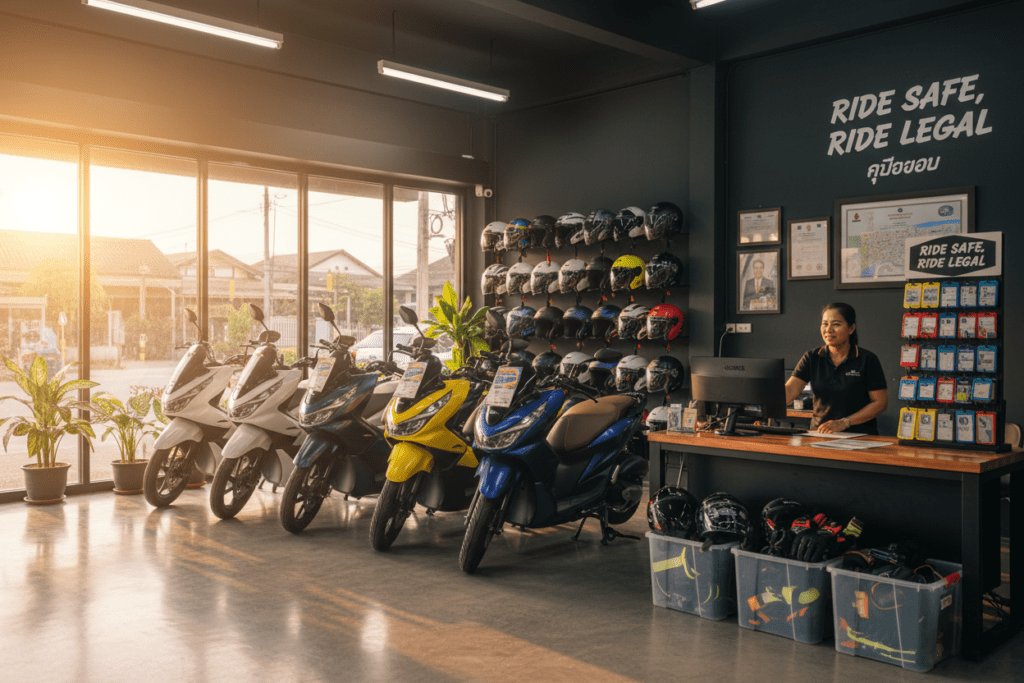
Renting Responsibly: Safety Starts with the Bike
We have talked a lot about financial protection, but the best insurance is avoiding the accident in the first place.
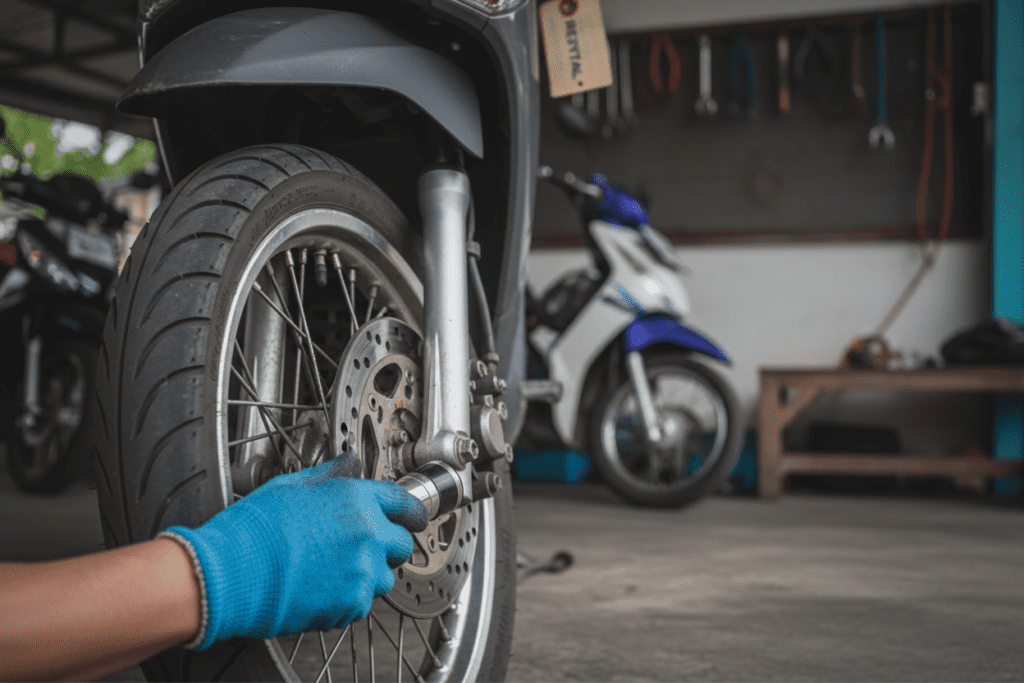
You would be shocked at the state of some rental bikes in Thailand. I’m talking about tires that are bald as an egg, brakes that feel like squeezing a sponge, and mirrors that flop around in the wind.
When you rent a bike like that, you are increasing your odds of a crash significantly. If you hit a patch of sand on a curve—which happens all the time here—bald tires will lose traction instantly. If a dog runs out in front of you (also happens all the time), you need brakes that bite immediately.
Insurance pays for the broken leg; a good bike prevents the leg from breaking.
You need to look for a legal motorbike rental. But what does that actually mean?
First, the bike must be registered. Look for the square tax sticker on the bike. It has the year written in Thai numbers. If the bike doesn’t have plates or a tax sticker, it’s not road legal. If the police stop you, they might impound the bike.
Second, you need a written contract. Never just hand over cash and ride away. You need a lease agreement that states exactly who you are, what the bike is, and the rental terms.
Third, and this is non-negotiable, you need a helmet. A legal rental shop must provide one. And please, try to find one that actually fits. Those plastic soup bowls they call helmets won’t do much at 60km/h.
When you pick up a bike, you need to do a full inspection. Don’t skip a pre-ride check—use our Motorbike Rental Checklist Thailand: 5-Minute Inspection to make sure your bike is roadworthy.
- Tires: Is there tread?
- Brakes: Squeeze both levers. They shouldn’t touch the handlebar.
- Lights: Check headlights, brake lights, and turn signals.
- Horn: Beep it. You’ll need it.
Mechanical failure is a real cause of accidents here. Imagine cruising down a hill in Phayao and realizing your rear brake cable just snapped because it was rusty. Read about insuring high-end motorcycles on ExpatCompares.
The problem with random street shops is that they often skimp on maintenance to keep prices low. They might roll back odometers or put 10-year-old tires on a “new” looking bike.
This is why I keep mentioning Byklo.rent. Their partners are vetted. They ensure the bikes are serviced, have valid tax and registration, and they operate with transparency. You aren’t going to get a bike with an engine that cuts out every 5 kilometers.
When you rent from a trusted source, you are effectively lowering your risk profile. You are removing “mechanical failure” from the list of things that could ruin your trip.
Also, do yourself a favor: take a video or photos of the bike before you ride away. Document every scratch. It stops scammy shops from charging you for damage you didn’t cause. Good shops will encourage you to do this. Bad shops will try to rush you.
Conclusion & Final Recommendations
I know this feels heavy. Discussing crushed limbs and bankruptcy isn’t exactly the “Amazing Thailand” vibe you were looking for. But if you respect the road and the rules, riding here is genuinely one of the greatest experiences of your life.
You just have to strip away the ignorance and prepare properly.
Let’s recap the three pillars of a safe motorbike trip in Thailand:
- Legal Compliance: Get your home motorcycle license and your International Driving Permit (IDP). Don’t skip this. It’s your “Get Out of Jail Free” card for insurance claims.
- Financial Protection: Buy travel insurance that explicitly covers motorbikes over 50cc (look for 125cc coverage) and covers you as the operator. Check the fine print for the Illegal Act clause.
- Mechanical Safety: Don’t rent from the cheapest guy on the strip. Rent a quality machine.
If you want to lock in that third pillar right now, save yourself the headache of negotiating with street vendors. You can browse listings for legal, insured, and high-quality motorbikes on Byklo.rent. It’s the smartest way to secure your transportation before you even land, ensuring you have a safe bike waiting for you.
Thailand is a paradise. The roads are an adventure. But don’t gamble with your health or your savings. Ride smart, ride legal, and enjoy the ride.
Frequently Asked Questions
Do I need an International Driving Permit (IDP) to rent a scooter in Thailand?
Yes. To drive legally and ensure your insurance remains valid, you must possess a valid motorcycle license from your home country paired with an IDP. The police frequently check for this, and insurance companies may deny claims if you ride without one.
Does my standard travel insurance cover motorbike rentals?
Most standard policies exclude motorbikes by default or limit coverage to engines under 50cc. Since most Thai rentals are 110cc-125cc, you must specifically purchase a policy that covers these engine sizes and “adventure activities.”
How much does a motorbike accident cost in Thailand?
While minor care is affordable, serious accidents requiring surgery in private hospitals often range from 100,000 to 300,000 THB ($2,800–$8,500 USD), excluding extended hospital stays or medical evacuation.
What should I check before renting a motorbike?
Always check the tires for tread, test both brakes, ensure lights and signals work, and verify the tax sticker is current. We recommend using a reliable platform like Byklo.rent to ensure you get a vetted, roadworthy vehicle.